Sign Fabrication: How The Process Works Behind The Scenes
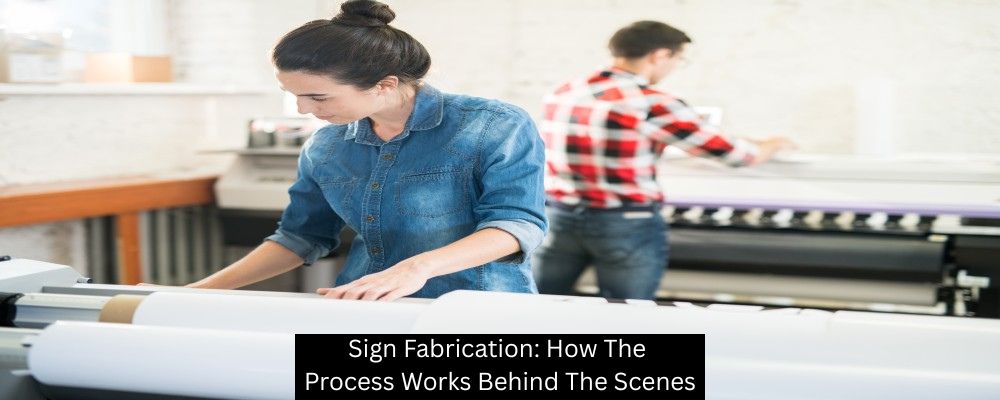
Most business owners see the finished sign gleaming above their entrance and never think about what it took to get it there. Sign fabrication is a precise, multi-stage process that blends engineering, artistry, and materials science. Boomtown Signs fabricates every sign in-house, which means our team sees your project through every stage without passing it off to anonymous subcontractors. Understanding what happens behind the scenes create problems.
From Approved Design To Physical Sign
Material Selection And Procurement
helps you appreciate why quality signs take the time they do — and why shortcuts Fabrication starts before a single cut is made. The fabrication team reviews the approved design and specifies materials — aluminum substrates, HDU foam, acrylic faces, LED modules, channel letters — based on application, environment, and longevity targets. Boomtown Signs sources commercial-grade materials rated for Oklahoma’s climate extremes, from summer heat above 100 degrees to winter ice storms that can crack inferior substrates.
Cutting, Forming, And Assembly
CNC routers and precision cutting tools transform flat sheets into the shapes your design requires. Dimensional letters are routed, formed, and welded or bonded into final shapes. Channel letter cabinets are bent and welded from aluminum coil stock. Every component is measured against the approved drawings before assembly begins, catching dimensional errors before they become expensive corrections.
Finishing And Quality Control
Paint, vinyl graphics, and surface treatments are applied in controlled conditions to ensure even coverage and adhesion. Boomtown Signs runs every finished component through a quality inspection that checks color accuracy against brand standards, edge quality, structural integrity, and electrical function for illuminated signs. Only signs that clear every checkpoint move to installation.
Six Stages Of Professional Sign Fabrication
- Material Specification: Matching substrate, face, and hardware choices to the sign’s environment and design requirements.
- Digital Cutting: CNC routing and precision cutting producing exact shapes from approved design files.
- Metal Forming: Bending, welding, and bonding metal components into structural sign cabinets and letter forms.
- Surface Finishing: Paint, vinyl, and graphic application under controlled conditions for color accuracy.
- Electrical Assembly: LED module installation, transformer wiring, and circuit testing for illuminated signs.
- Pre-Install Inspection: Full dimensional and visual check against approved drawings before the sign leaves the shop.
Explore More
- LED Signs Oklahoma City — https://boomtownsigns.com/led-signs-oklahoma-city-ok/
- 3D Lettering Signage Oklahoma City — https://boomtownsigns.com/3d-lettering-signage-oklahoma-city-ok/
- Post and Panel Signs Oklahoma City — https://boomtownsigns.com/post-panel-signs-oklahoma-city-ok/
Frequently Asked Questions
Why Does Fabrication Take Several Weeks For Large Signs?
Large signs involve multiple material orders, multi-stage production sequences, and quality checks at each step. Rushing fabrication is where cosmetic and structural defects are introduced. A realistic timeline is a sign of a serious fabricator.
What Is The Difference Between Routed And Painted Dimensional Letters?
Routed letters are cut from rigid substrates like HDU or aluminum, giving clean, crisp edges. Painted finishes are applied after routing for color. Some letters use vinyl overlays instead of paint for certain color effects. Each approach has cost, durability, and visual tradeoffs.
Can I Tour The Fabrication Facility Before Committing?
Boomtown Signs welcomes facility visits. Seeing where your sign is built — the equipment, the team, the materials — gives you confidence that the quality you see in photos is consistent with what you will receive.
How Are Illuminated Signs Tested Before Installation?
Illuminated signs are fully powered and tested in the shop before delivery. Every LED section, transformer connection, and lens is checked for function and evenness. Signs that fail testing are repaired and retested, not shipped.
What Causes Signs To Fail Prematurely?
Inferior substrate materials, improper paint adhesion, undersized electrical components, and poor structural connections are the leading causes. In-house fabrication with commercial-grade materials and quality inspection protocols significantly reduces these failure points.
Sign fabrication is where good design becomes a real, durable physical object that will represent your business for years. The quality of the fabrication process directly determines the quality of what customers see every day. Boomtown Signs invests in people, equipment, and materials at every stage because shortcuts in the shop always show up on the street. Contact us to learn more about what sets in-house fabrication apart from outsourced production.
Back